Per- and Poly-Flouroalkyl Substances (PFAS): New Issues for Industrial Painting Industry
WHAT ARE THEY?
Per- and polyfluoroalkyl substances (PFAS) are a group of over 9,000 synthetic chemicals that have been used in industry and consumer products, worldwide, for over 70 years.
The EPA has identified them as:
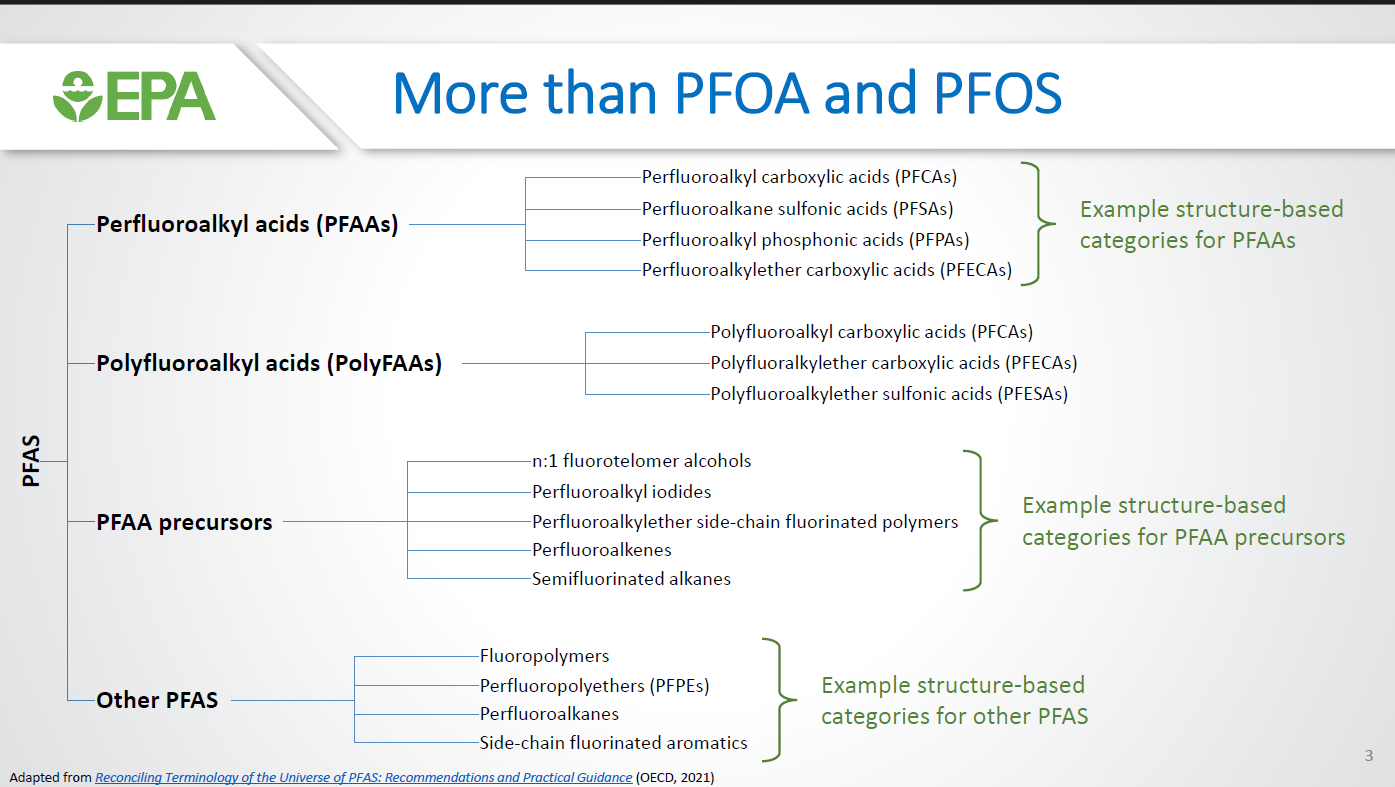
PFAS of all types are associated with old and current alkyd systems, chromium conversion coating systems, siloxanes, polysiloxane, and sulfonates. Fluoropolymers are present in many current coatings including but not limited to anti-foulants, floor coatings, chemically resistance coatings, and more.
PFAS are not easily identified on Safety Data Sheets (SDS), because of the different types of PFAS and the different naming conventions used by manufacturers. Also, SDS do not currently have to disclose all chemicals present, only those above specific thresholds. Some acronyms associated with PFAS include: ETFE, ECTFE, PFAA, PFCA, PFBA, PFHxAM, PFOA, PFNA, PFDA, PFPE, PTFE, PFA, PFSA, PFESA, FTOH, FASE, FASAA, FTCA, FTSA, FASA, and more.
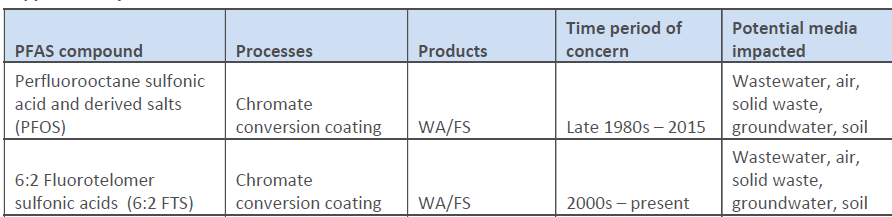
MN Pollution Contral Administration has published a document on “PFAS in the metal plating and finishing industry” which provides a list of some specific PFAS associated with paints which stated:
- PFAS can be used in several types of metal coating, either as WA/FS--as in plating—or as
- PFAS are often used as cleaning, etching, and other metal surface treatment agents associated with a variety of metal finishing processes
- "PFAS-coated and PFAS treatment products can be found in a wide range of industries, including the chemical manufacture and architecture industries" (“PFAS in the metal plating and finishing industry”)
- REGULATORY ACTIONS
While EPA is initially focusing on drinking water standards and major sources of PFAS (processing plants and large users), EPA is also taking actions that have potential immediate and future impacts on the industrial painting industry.
COMPREHENSIVE ENVIRONMENTAL RESPONSE AND LIABILITY ACT (CERCLA)
Effective July 8, 2024, EPA added per- and polyfluoroalkyl substances (PFAS) — perfluorooctanoic acid (PFOA) and perfluorooctanesulfonic acid (PFOS), including their salts and structural isomers as hazardous substances under the Comprehensive Environmental Response, Compensation, and Liability Act (CERCLA), also known as Superfund.
“Any entity that releases a pound or more of PFOA or PFOS, or their salts or structural isomers, in any 24-hour period must report those releases consistent with CERCLA 103 and EPCRA 304.”
The designation as hazardous substances also require DOT to add PFOA and PFOS to their Hazardous Materials Table in 49 CFR 172, Table 1 and to regulate transport.
Potential CERCLA Liability
Under CERCLA, any party that encounters a hazardous substance, whether knowingly or unknowingly, can be found liable as a polluter and will be responsible for paying penalties and cleanup costs. For contractors, this means that if PFOA or PFOS are unintentionally encountered on projects from years ago, they may be forced to pay for its cleanup costs even though they did not manufacture or apply the PFASor if others contributed more.
As described in CERCLA section 107(a), the following categories of persons may be liable for the costs or performance of a cleanup of a hazardous substance under CERCLA:
(1) Current owners and operators of a facility where hazardous substances come to be located; (“PFAS Enforcement Discretion and Settlement Policy Under CERCLA”)
(2) Owners and operators of a facility at the time that hazardous substances were disposed of at the facility; (“PFAS Enforcement Discretion and Settlement Policy Under CERCLA”)
(3) Generators and parties that arranged for the disposal or transport of hazardous substances; and
(4) Transporters of hazardous waste that selected the site where the hazardous substances were brought.
While contractors are accustomed to managing hazardous materials such as asbestos or lead, those substances come with established OSHA and EPA standards: clear exposure thresholds, procedures for removal, and designated disposal facilities. None of this currently exists for PFAS.
EPA has not set background levels for soil and groundwater thresholds, nor standards for management or disposal of PFAS wastes. There is no clear framework for how a contractor should comply. Should the owner assess pre-existing PFAS on a structure or asset? Without testing, it is unlikely that contractors would know PFAS are present.
EPA has issued an enforcement discretion policy for PFAS. EPA will focus its enforcement efforts on holding responsible those who significantly contribute to the release of PFAS into the environment.
Potential Tort Liability
Recently PFAS have started being excluded from insurance policies PFAS (as defined by at least one insurer) went beyond the EPA identified PFAS (items in bold are in EPA regulations):
homologue chemicals; or
Were a contractor to unknowingly expose workers, the public or the environment to these materials, they may risk tort liability.
EPA INTERIM GUIDANCE ON THE DESTRUCTION AND DISPOSAL OF PERFLUOROALKYL AND POLYFLUOROALKYL SUBSTANCES AND MATERIALS CONTAINING PERFLUOROALKYL AND POLYFLUOROALKYL SUBSTANCES—VERSION 2 (2024)
The interim guidance issued in April 2024 suggests 3 possible treatment methods for PFAS. The interim guidance summarizes scientific information on current understanding of PFAS and focuses on one short-term strategy and three currently used disposal and destruction (D&D) technologies:
However, for all landfill types, current information shows landfills release more PFAS to the environment than previously thought in 2020.
“EPA is recommending that managers of PFAS wastes consider the nature of the waste, location, potential for environmental release, and other factors to determine the most appropriate destruction, disposal, or storage method.”
This means that generators and disposers of PFAS wastes have no guidance at all on how to evaluate appropriate storage and disposal scenarios.
EPA AND OTHER TEST METHODS FOR PFAS
EPA has developed two sampling and analytical test methods for PFAS for groundwater, surface water, wastewater, and solids, including soils, sediments, biota, and biosolids. They include Method 1633A for 40 PFAS Compounds and Method 1621, “Determination of Adsorbable Organic Fluorine (AOF) in Aqueous Matrices by Combustion Ion Chromatography (CIC). They are working on additional methods.
The above methods could be used to evaluate existing PFAS present on structures and assets and in the surrounding environment, prior to surface preparation and repainting activities.
Several companies have developed high-volume and passive monitoring for airborne PFAS, and a few laboratories are using EPA analytic methods (TO-13A) for analysis of some PFAS.
Minnesota Pollution Control Agency (MNPCA) has initiated PFAS ambient air and deposition monitoring to identify areas of PFAS contamination and potential sources.
COSTS
PFAS are already increasing costs for insurance, testing, consulting, and disposal.
WHAT CAN YOU DO TO MINIMIZE RISKS?
When taking on any new project, consider the following items:
SUMMARY
The liabilities and regulatory status of PFAS will continue to change as our knowledge grows, however, everyone should be evaluating their potential risks related to PFAS, necessary training and worker protection and disposal and mitigation measures.
NSPCA is working with AMPP and other organizations to address PFAS related to the industrial coatings industry.
We will continue to update you on this topic.